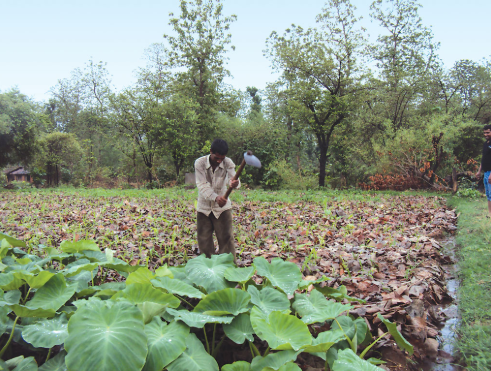
Friday, October 5, 2018

Desi bean farming


Shyam's English name is Bean. In winter, native beans are very popular vegetables. The price is high due to low supply at the beginning of the winter season. This lemon juice is eaten in two ways as a curd. Desi beans are an important winter vegetable of Bangladesh. It's nutritionally delicious, and very popular with people of all classes. The lean bean seeds contain plenty of protein and carbohydrates, which are very useful as food. Apart from this, there is enough calcium, phosphorus and vitamin 'A', 'B' and 'C'. These nutritional components play an important role in nourishing our body.
Beans can be cultivated in all types of soil. However, fennel or sandy fennel soil is more suitable for native cane cultivation. It is better to choose a high or medium high ground for cultivating bean.
The Bangladesh Agricultural Research Institute, which was invented, is very good for the cultivation of native beans Bari Shim-1 and Bari Shim-2. Apart from this, two-month varieties of white Ipas-1 and Baramasi violet YPSA-2 are also cultivated around the whole year.

Substantial land and soil: Beans can be cultivated in almost all types of soil. However, the yield of fine-fiber and sandy soils is better.

Caste Selection: Various varieties of beans include walnutconsana, Naldak, ashina, Kartika, Hatikan, Bouqani, Rupban, Bari Shim-1, Bari Shim-2, Bari Shim-3, Bari Shim-4, Ipsa-1 and Ipsa-2 etc. .

Sowing time: Proper time for sowing seed from month to month.

Maternal formation and fertilizer application: Country Shim is cultivated mainly on the basis of maternal practices, surrounded by homesteads, ponds, pavements, and ground aisles. However, if the row is cultivated, then rows at a distance of 1 meter and 50 cm in every row after 45 cm long, 45 cm wide and 45 cm deep mada to be made. Then each mother should fill the soil with 10 kg of raw dung, 150 grams of TSP and 100 gram mop fertilizers. There is monsoon when sowing seeds, so for the reason that the soil does not get water, the soil is filled up to 5 cm in the soil from the common flat of land.

Sowing of seed: After 8-10 days of application of medicines, two or three seed spacing should be sown in 2.5-3.0 cm deep in every MADA. After 10-12 days of planting, every mother will have to remove two healthy and vigorous plants after the rest. If the seeds are sown in 24 hours before sowing, then early saplings grow. Seed beans require 40 grams (5-7 kg in hectare) bean seeds in one century or 40 square meters of land.

Next Service: Regularly cleaned with seedling and its surrounding weed hoe. Apart from this, it will be kept in the loosening and sprouting. If the bean has the ability to tolerate the drought, then due to absence of rain, water is irrigated due to deficiency of soil.

Upper fertilizer application: The application of fertilizer in the semolina is done in two installments. The first installment is one month after planting and two to four flowering plants in the second installment tree. In every installment, mix 25 grams of urea and 25 grams of Mop fertilizer around the beginning of the tree (10-15 cm away from the beginning) and apply the mixture to the soil. If there is lack of roses on the soil during fertilizer application, then irrigation should be done with granules.

Stretch or bouquet: The greater the chance of shampoo bower, the higher the yield. Therefore, when the seedling is 15-20 cm long then the bamboo shoots (kanchisaha) should be put on the ground near the beginning of the tree. Shingles can spread good fruits and fruits in this storm. Bamboo or bamboo can be removed in domestic system or shimagacha can be removed in the house of six homes. Apart from this, bamboo flasks and kanchi are made of structures like English 'non' and also produce good yields from bamboo by plowing on the land.

Before Planting After Taxation and Care:
The time of sowing the seeds of indigenous bean from Assh to Bhadra. But the audible month is the appropriate time. In the month when seeds are sown, before the end of the Agrahayana or the beginning of Kartik, there is no tree bearing flowers and fruits. Exception is the Bermasi variety. Since there is an advance, medium and nabi variety in the local Shim, there is no yield in time when cultivating knowledge without knowing the exact information of the species.
In addition to the native shim fields, beside the wall of the house, small mats are placed on the sides of the yard, and they can be cultivated in the fields, ponds, and on the road side and in the vineyards of the fields. In the field, cultivation of land and ladders has to be done very well and in equal condition. After that, after making 5 feet of row in 10 feet distance, the hole or mada should be made. Dig a hole of one and a half feet and dig a deep hole, keep 10 kg of organic or dung fertilizers, 50 grams of urea, 100 grams of TSP and 50 grams of Mop fertilizers mixed with 6 to 7 days. It may be useful to take fertilizer plants. The other holes and fertilizers have to be used for planting in other places.
Seeds of 40-50 grams per century are required. 3-4 seeds have to be sown in every mother. The seedlings have to be removed after leaving 1 or 2 dry and vigorous plants. But if there is shortage of seeds or if you want to plant good seedlings, then seedlings from seed in polybag can be made. It can be planted in the selected dry-leaf disease or insect-free weed plant. On the other hand, if the seed does not sow in the field due to rain or other crops in the field, it is better to make saplings in polybags over time.
After planting, if the tree is not coming to the tree or it is 15 to 20 cm in length, then it is not good to let the weed grow, keeping the soil in the beginning and keeping loose. If the tree is slightly taller, then it is necessary to prepare the woodwork and later the banner for the machar. For the rainwater that does not accumulate in the root of the tree, the drainage stem should be cut.

Winter tomato farming


Tomato is a nutritious quality filled with salad vegetables. Vitamin A and Vitamin C are also one of the sources. It also contains beta-keratin, a type of vitamin that protects from night blindness. There are more protein, carbohydrates, minerals and other essential nutrients. Herbal-rich Tomatoes contain cancer-resistant ingredients. Playing a tomato daily reduces the chances of having a 60 percent chance of cancer.

During the preparation of seed bed: suitable time for planting winter tomatoes, from the second week to the third week (from the last week of October to the first week of November).

Planting and Planting Method: Tomatoes can be cultivated in almost all types of soil. However, the belly dome-Ash soil is the most useful. The right time to plant sapling from the last week of Kartik (the last week of November to the first week of November). But till midnight - 20-25 days of saplings can be planted. When the land is completed, it is necessary to make the bed around 10-15 cm high and make drainage arrangements around the bed. With the help of planting, water will be provided. The distance from row to row is 50 cm and the distance of the seedlings to seedlings is 50 cm.

The best varieties of tomato name: Bahar, without tomato -4, without tomato -5, bari te to2 or ratan, bari tomato-3, 4, hybrid, vigorous, mintu, bari tomato -5 are very good results.

Land preparation and fertilizer application: The land is generally to be prepared by cultivating three four cultivars and ladder on land. Before the last cultivation, half of the quantity of dung fertilizer and the entire TSP fertilizer should be re-prepared and the land should be re-cultivated. The remaining half of the dung should be mixed with soil at the time of planting. Applying urea and potash should be applied equal to 15 days after planting and 35 days after planting. Apply urea 80-100 kg per acre, TSP 60-80 kg, MP 68-92 kg, gypsum 20-30 kg, boron 1-2 kg and 4 tonnes dung.

Irrigation: It is necessary to irrigate water if it is cultivated in dry season. Irrigation can be given three times considering the conditions of the crop and the soil.

Care: Understanding the condition of the land will give water to the trees with light shower. After weeding, after planting the weeds, the land should be sprayed and the weeds should be cleaned lightly. Tomato prawns in the tree to get good yield and perfect results. As well as creating two 'non-shaped bamboo frames' between the two rows, the tomato yield increases. If the tree is not too large, then it is necessary to prune extra stems. Before the application of the first and second installment fertilizer has to be pruned. Insects and disease attacks are less and fruit size and weight increase. Hedge should be kept weed-free.

Disease and insect suppression: 5 percent of the tomato fruit pesticides should be sprayed with mixed mixture of 10 grams of 425 EC 20 ml in water. In some areas, there are worms, chronic diseases of the disease. In that case, before the planting of the soil, puradan-3g is purified by soil, the incidence of these diseases decreases. If properly attended, the hectare yield can be around 70-90 tonnes per year.

Collection and storage of tomato seeds: Planting fruit from the soil should be kept in the house for 2-3 days, so that the fruits are soft. After softening, the seeds cut into two parts should be kept in a dry glass or plastic container 24 to 48 hours. After that the seeds should be washed thoroughly with clean water and dry them in sunlight and close the glass or plastic containers.

Harvesting and harvesting: Seedlings can be started in 60 to 90 days of planting seasoned tomatoes. Tomatoes can be collected both in ripe and raw areas. Seven to eight tomatoes can be collected from every tree. If there is little reddishness in the bottom of the fruit, it is useful to harvest crops. Tomato yield can be up to 80 to 100 kg per annum.

Onion cultivation and doing


There are fame around the world in the lavish luxury of Bengalis. Consumption of cooked cuisine in combination with the variety of spices, it does not take time to conquer any human mind. The rate at which Asian people use spices on our daily food list is not noticeable in other countries of the world. And there is no substitute for spicy food to make it tasty and delicious. Likewise, I will present today the description of a spicy variety and its use is well-received in the house of the Bengali people. It will be wrong to say the onion is only spice. Because onions are spices and vegetables too. Onion with rice, raw onions on the salad, raw gooseberry in Jhalmuri, potato, and brinjal flour, and its use in dried fare is very much appreciated. The use of betel paste as a spice, makes the butter a delicious and rosy way.
Onion is an important and essential spice. Vitamin A is more in its leaf. In addition, vitamin C and calcium rich on onion leaves and data. The onion meal is also fast palmer and it is not a combination of it.

Production ground: Major onion production areas of Bangladesh are in greater quantity of onion production in the Faridpur region of Chittagong, Comilla, Noakhali, Sylhet, Dhaka, Manikganj, Faridpur, Jamalpur, Mymensingh, Barisal, Jessore, Kushtia, Rajshahi and Rangpur.

Farming method: Sandy-loam soil is good for onion cultivation, but the pH value is 5.5 to 6.5. For the cultivation of this crop, it is necessary to keep the soil very tidy with frequent cultivation. Onion is well-fertilized with good organic matter.

Onion varieties: Taherpuri, Bari onion-1 (Tahrpuri), Bari onion-2 (Rabi season), Bari onion -3 (Kharif season) (a) Local varieties (b) Faridpuri

Sowing of seeds: Seeds produce seedlings and they have to plant in the seed field. Salkkand can be planted. Onion seedlings are cultivated on seeds by sowing the seeds.

Seed rate: In the method of seed, 2.5-4 kg seeds per hectare, around 550 kilograms of sandalwood in bulb method.

Production of seedlings: For seeds of 3m, 9m siege, we need 20-30 grams of seeds. After seed sowing, the seeds are covered with 5-6 cm thick sand.

Sowing time: Seed sowing during the month of October-November in the seedland or on the land. Direct seed should be row-bred.

Method of planting: Onion is cultivated in three ways in our country.
1. Sprinkle seeds directly on the land
2. Planted off or balap
3. Planting seedlings collected from seedlings.

Planting Distance: Distance from row to 30 centimeters 5-6 seedlings can be kept at a distance of 30 centimeters per row. It can be done for planting the seedlings almost a month after sowing. The distance of the row is 30 centimeters and the row 4 distance 8-16 centimeters. Sapling can be grown early in crop by planting. Seeds can not be grown in the first year from the seeds of foreign big varieties of onion seeds. Generally onions of 1-2 cm in diameter can be planted at a distance of 3 to 40 centimeters in the range of 8-16 centimeters depending on onion varieties. With the cultivation of onion land, soil erosion should be given to weed control and water irrigation.

Fertilizer application: Dung, fertilizer, khail and TSP fertilizers can be applied before scraping at the time of preparation and after fertilization of urea and muriate of potash fertilizer after 15-18 cms height.

Care: The clay that comes out of the potted plant has to be broken at the beginning. Cauliflower can be used as curry or salad. Applying urea and potash fertilizers in the portion of the onion crop for which seed is kept, TSP fertilizer can be applied in the second phase of 10 kg per hectare.

Seed Production: The seeds are sown much thicker to produce seeds. As a result, small size of onions are found in the number of times more than the same land. If it is sown and stored in the next year, then it is available in excess quantity of seeds.

Collection and testing of good seeds: Must have to buy improved and expired seeds. Best of all, if you can get seeds from BADC seed center. To test the seed, leave the thin part of a banana bark of 14-15 inches long and leave the remaining part in the left side and leave the remainder in the left. Of these, by adding 25 seed seeds into the house, the bark will be tied and kept in a safe place of the house. As if both light and air are in contact. Thus, after 4/5 days, it will be wet with a little water. Then, by opening the embankment, you see how many seeds have sprouted. If 8 seeds per ten seeds grow, then it can be understood that it is good seed. Seed should be kept in a thin cotton cloth in pond water for about 30-40 minutes. Then the cloth pots will be kept loose in a safe place by binding tightly. After hanging for 48 hours, the seeds of the seeds sprouted in the face. When roughly 85 percent of the seeds are seen in the mouth, the soil will be equalized by light ladders sprouting them. It takes at least 10-12 days to sow the seeds and sow the seeds. After 35-40 days after planting, after planting the seedlings with thin slit, it is better to increase the growth of the plant and keep the soil in the soil for many days. With the same method of planting the raised seedlings on the same soil, it is better to apply soil to the soil and to fill the soil with sapling in the hole after plowing the soil with a ladder. In this case, the distance of the seedlings from seedlings to 10-15 cm And the distance from row to row is 30 cm.

Sweetie farming


Mittakumda can be sown at any time of the year in Bangladesh, but the farmers generally cultivate sweet pies during the Rabi seasons, from November to January and in the Kharif season from February to May.

Land preparation and seed sowing:
For producing small quantities of sweets, the seeds can be sown in shade without shelter around the house. In the case of business-based cultivation, first cultivate the land with cultivation and ladder and sow the seed in the loft or row in a specific distance. In the case of bushy varieties, two meters distance can be kept as well. It is recommended to be 3 to 4 meters in the paste.

Seed Planting:
For the Baishakhi pumpkin, it can be made from 2.3 to 2.7 meters and for other pumps, 3 to 3 cmm can be made. It is better to make holes (80 × 80 × 80 cubic centimeters). There are six to seven seeds to be planted in each field. After planting, there are two good seedling plants. The need for 1 to 2 decimal 1.9 kg seed of hectare. Boishakhi pumpkin clay can be used on the ground. Makers are necessary for other pumpkins.

Fertilizer application:
For pumps, there are 5 tonnes of dung fertilizers, 350 to 400 kg of canal, 120 to 130 kg of urea, 150 to 175 kg of TSP and 120 to 130 kg MP for hectare. After 10 to 12 days after sowing the seeds in mache, it is necessary to fill the holes with mud fiber, ash, khail and triple super phosphate holes. After the plants are 25 to 30 cm long, cut a shallow stem with the macho boundary and add the urea fertilizer to the soil of the drain and fill the stove. Muriate of potash is to be applied with uranium.

Interim service:
Most of the areas require irrigation if sweets are cultivated in dry season. It is very important to arrange drainage during rainy season.
If you throw it on the bower, the yield is high and the quality of the flowers is good; But to consider the economic aspect of the increase in the cost of the bioonom. When cultivating cultivated varieties of land as a crop, it is better to spread some pistachios under the fruit when it is fruit that is not affected by soil contact.
In the morning for artificial pollination, the male flowers are worn by the anther of the flower, and the female flowers are gently rubbed in the womb. Occasionally creates problems with fruit fly called insect fruit. If you can not control the insect with medicines, then it is possible to cover the cloth or polythene with a bowl until the fruit gets bigger than the foreskin. In this case, artificial pollination is needed.

Tree trimming:
Pumpkin yield is less often due to excessive growth of the plant. In this situation, some plants can be cut off.

Pollination problem:
Sometimes, after the pumpkin leaves from the flower dry up, or it is dried away. After applying TSP fertilizer to the soil and after flowering in the morning, it can be passed on to the flowering womb of fruit flowering of mulberry flowers.

Pest Suppression:
Among the various insects of poultry plants, lalpoka, kettle insects and fruit flies are notable. Spraying of Seven (10%), Dusting or Nexian (zero decimal 5%) and Dygeninan (zero decimal 7%) spray can be applied to control the insect. The fruits of the fruit of the turtle penetrate the hole. The area where the affected area is rotten or the increase in the part of it stops. Depressants, nyxian or diarrhea can be used occasionally to suppress the insect.

Disease suppression:
Among poultry plants, Powdery Milady, Downey Mildid and Anthroconge chief. Diathane or parget can be sprayed after two weeks. It is better to clean seeds by mixing 1 kg of jay with 100 gallons of hot water in antidote.

Improved varieties of horticulture


Many people do not like to eat because they are exaggerated. But its medicinal value is much higher. These diets, dermatitis and worms are all about these things. Other nutritional value of Vitamin and Iron-rich vegetables is not less.

Apache and Karla are cultivated in almost all the districts of this country. Although only precipitated in summer, it can be cultivated around the whole year. Which are relatively small, round, more titha, they are called evaporation. Large, tall, and a little less, the fruit of taste is called Karla. Discourtesy are small and low inclined. The clay is overlapping and long trapezoid, the leaves are also large. Many people do not like to eat because they are exaggerated. But its medicinal value is much higher. Diabetes, dermatitis and worms, they are a specialist. Other nutritional value of Vitamin and Iron-rich vegetables is not less.

Soil:
There are many types of soil that can not be grown in the soil and the water is not accumulated. However, it is better to have biomass-rich fennel and sandy fennel in the soil. The shade is not well in place.

Cast:
Due to the evaporated and curried vegetables, varieties of varieties are not available. The next year, after planting a seed, it is not possible to get the exact same type of fruit from the seeds kept from the seeds. Therefore, it should be cultivated by collecting good varieties of good seed from a trusted source every season. Almost all species of camels are native or local. The cultivators keep their seeds and apply them. The varieties of karla in this country are:

High yielding varieties are collected in 1. Bangladesh Agricultural Research Institute has invented varieties. This tree has 25 to 30 karla trees. Hectare yield yield 25 to 30 tons (100 to 120 kg per century).
BADC has another species named 'Gaz Karla'. This species is also good, 15 to 20 trees per plant. The yield is 20 to 25 tons (80 to 100 kg per century).
Hybrid variety Bulbuli, Tia, Parrot, Kakali, Prime-XL, Tide, Green Star, glory, Pride 1, Pride 2, Green Rocket, diamond 304, Mini, Goodbye, Wyjman, Jumbo, Ghazni, Eureka, Diamond, Manik, Gem , Joy, Code-BSBD 2002, Code-BSBD2005, Pentagin, Vivak, Piya, NSC5, NSC6, Raja, Bhai etc.

Land and MADA:
When the land is properly cultivated, weeds should be cleaned by adding 40 kg of raw dung manure to each district. After finishing the ladder, it will be cut to a length of 1 meter wide and 30 cm in width. The length of the land can be as tall as the bed. If it is too long it can be broken into the middle. In case of hoarding, 1 m and karla 1.5 m away from the mada will be made. Mama to be made 40 cm in all directions. Season 7 to 10 days before seed drilling to be mixed with rotten cow dung and fertilizer soil soil.

Seedling:
Anytime of the year it is now fitted. However, it is best in Kharif or summer-monsoon season. To cultivate this season, seed will be harvested from February to May. If you want to get the yield in advance, it is better to sow seeds in mid-February. But it is better to spring-summer. If you want to cultivate the need to plant seeds in January to March. Seeds of karna can be sown from March to June. Every seed should be sown in every madda. If the seeds are hard to grow, the seeds should be kept wet in the night before the seedling, then it will grow well. However, the seed can not be sown directly in the seed of Madha, but it can be planted in the seedlings of cotton or polybag. Generally 600 grams of seeds are 600 to 700 seedlings. Seeds of 12-15 grams per century and seeds of 25 to 30 grams of karla takes.

Fertilizer Quantity:
Organic cultivation requires a lot of organic manure. Half of the total organic manure should be given in the cultivation time and the remaining half of the seed sown or planting 10 days before planting. Other fertilizers should be given according to the table below.

Benedicted:
If the seedling is 20 to 25 cm long, it will be necessary to arrange sticks to the bedside. Along with this, the plate should be constructed from one to one and a half meters above the ground. Since the bed is 1 meter wide, it is better to keep the straps on the same width. It is easy to carry out and to work. Bamboo sticks can be made on his head by creating a ga rope, a rope etc., and it can be made by spraying ribbons or bamboo sticks. The yield of the karala is 25 to 30 percent higher than the traction on the soil.

Irrigation and weed clear:
The seed will be sown in Madha. After planting, after drying the mada will be irrigated. After irrigating the soil, it will be washed and cleaned by weeding. Due to the absence of water, the growth of the trees decreases, flowers and shrubs fall and fruits are small. If it is drought or if the land is dry, then irrigation will be given. Irrigation should be made after fertilizer application every time. From small to small trees, the tip of the tree comes out. The yield is better if they are truncated. Keep in mind that the land can not get water.

Harness:
After 40 to 50 days of planting, the discourse starts giving fruit. 60 days after the start of charcoal fruit When the fruit starts to come, the fruit can be harvested about two months from the tree.

cultivation of kutcha vegetable


In English it is called Okra. It is also known as Lady's Fingers in the English-speaking area outside of America. Molluscum (another name Vendée) is a type of flowering plant of Malvaceae family. The scientific name Abelmoschus esculentus; Or Hibiscus esculentus L. Mollified a nutritious summer vegetable. In our country, this vegetable is cultivated till the Bhadra month from the beginning of Magh Month. Various varieties of papaya include Prabha Srabani, Parvati Kranti, Orka-Anamika. Sustainable short term of these species. There are also varieties of our country.

It is always good to use new seeds for cultivation of papaya. Farmers will benefit from this. For the cultivation of molluscum, the land will be selected for the Prothom-alo-air. The land will be elevated and there should be good facilities for water harvesting. Dry-fibers are also suitable for all types of soil cultivation, although they are suitable for papaya cultivation. After the cultivation several times, during the last cultivation, 10 quintals of dry dung or decomposed fertilizer, 40 kgs of super phosphate will be mixed well with the soil.

After 40 days of planting the seed on the soil, 6 kilograms of urea must be mixed with soil. After 5 to 6 inches of coriander seedling, every gram of Kurigram will be covered with soil after rubbing it from two sides of the worm. This will yield more yield.

Apart from this, agavebacter and software called germs can be used for more production. In this, bigha yield increased from twenty to thirty percent. Before planting the seeds of mollusch in 10 to 13 hours after planting in the fields, germination will be put in the row. In the cultivation of molluscum, one inch of two rows and two inches of seed should be kept in the gap.

Under the care, the weeds should be cleaned and applied to the urea fertilizer tapedress, 6 kg in the perfume, five centimeters away from the tree. In order to prevent insects, the last cultivation of soil will be mixed with 2.5 percent maladhi powder and 5 percent of powdered insecticides. Besides, when the nimapata is mixed during the cultivation, the insects on the ground will be suppressed. If the pest attack occurs in the cultivation of molluscum, the malathion 50 EC medicines will be sprayed with a spoon of water per liter of water. When attacking various bacteria molluscs, diatrin M-45, Pectaph, Blitox etc. will be sprayed with 40 gram of 16 liters of water. However, the medicine can not be taken from the fields for 4 to 5 days for the treatment.

Ol farming


The details of the ol farming
The pre-Aryan language comes from 'Oll'. Oul is one of the most cash-rich vegetables in Bangladesh. Wool is cultivated in almost all areas of this country. But in different areas including Satkhira, Khulna, Jessore, Comilla, Chittagong Hill Tracts, now a very good variety are being commercially cultivated. Falgun-Chaitra month is suitable for planting.

Tree description:
Ol is a crumbling grass growing under the ground. The orchids can be round or long in different shapes. The top portion of the neck is like a disc. The diameter of each ear can be 10 to 50 centimeters. Weight of 20 kg weight is seen in the market. The leaf buds are straight out of the soil. Many people make mistakes because of him. The bot is divided into several branches on the upper side and arranges the leaves on both sides. The size of the ear or the size of the grinder is as large as the size of the tree and leaf, and the size of the ole also increases in proportionally. Page composite The leaves die in winter, but under the soil the bulb is in dormant position. Later leaves emerge from the center of the throat in the season or winter. If you do not keep the bulb from the soil, then there are many big holes in a few years. Many varieties of Olga are different types. In the same way, its root or root has climbed upward and the roots do not fall down. But never gets up on the ground. Various varieties of wheat are available in this country. Among them, 'Madrasi' is best in the field. In the absence of proper research, yet a high yielding variety has not been invented in this country.

Farming Method:
Wool needs high land that does not stand for water. The shadows are not good. Sandy foam increases well on the ground. To produce olive oil efficiently, a good place will be collected from a trusted place or person. Planting as a 'wheat seed' is called a 'mill'. And if you can create a mill itself, that is the best. Starting from the ground, Kartik-Agrahayana started raising the month. Then the paths that are grown on the four sides of the wall will be collected. The mill is made from these faces. Select the larger ones as possible, mix them with sand and soil and spread them on the ground in light-air shade. These faces should be planted in 8 to 10 cm deep soil in the well-cultivated land of Chaitra-Boishakh. The length of planting may be kept from row to row 30 centimeters. The distance may be extended slightly if the size of the larger size is larger. After 20 to 25 days of seedling, 300 grams of urea, 500 gram mop and 1.2 kg of TSP fertilizer should be prepared with powders mixed with soil for every century land. The necessary irrigation should also be made. These faces will become mature in the month of Kartik-Agrahayana and become a 'chakhi'. As soon as they save these mills, the chakra-boishakh will grow from these chicks in the month of the month.

Wool's land should be prepared with four to five cultivars. Then have to make the planting design. Generally, the distance from row to row for the oval is one meter. However, the job distance from the mill according to the size or weight of the mill is different in every row. For this reason, the collected grids are roughly the same size or weight. If not, then according to size or weight, the mills should be divided into two to three grades and sowing the seeds. For example, planting distance of 200 to 400 grams will be 1.75 meters, 1.9 meters for jobs of 400 to 800 grams, and above 800 gram weight, can be given distance of two meters for the job. As already mentioned, the size of the mill is as big as the size of the produced wool. That is why it is very profitable to have a large millisecond, especially the 800 grams of high-end mill. The best for planting and harvesting of 250 to 500 grams of the mill.

Horticulture has to be planted in the field of planting distance. The size of the hole is also to be done more according to the size of the job. According to 'Chaki', a hole must be 20 to 50 cm deep. The diameter of the hole can be 15 to 25 centimeters. Under the hole, the shoe should be placed on it with a little ashes. It should be noted that the face of the mill is on the straight side of the sky. Then the mixture will be mixed with soil from the soil. Fertilizer levels are 30 kg urea per acre, 120 kg TSP, 50 kg MOP The amount of fertilizers to be added to the soil of every hole will depend on the number of holes per acre. The total amount of fertilizer should be divided by the number of holes per acre and the quantity of fertilizer should be taken out. Fertilizers have to fill the hole with mixed soil. While filling, it should be noted that there is a good 'Joe' on the ground. After the fill, the face of the hole should be slightly raised with soil and made to the mound. The advantage of this is that, many times in the hole, the 'water' is destroyed due to rain water. Due to the construction of the mound lowers this possibility. It takes a lot of time to get out of the 'chakis' on the soil. So it is better to cover all the land with straw or hay. If there is a shortage of sulfur in the soil, then 20 kg of gypsum fertilizer per acre and 100 kg of ashes is available if the benefits are available.

After transplanting the plants, so that they can spread the leaves on the soil well enough, they will have to be covered with a little looseness to the whistle or straw mouth. After one year after planting, 25 kg of urea and 20 kg of MOP fertilizer should be given below the straw or ketirapana after planting. After a few days the soil can be shredded lightly after some time. However, it should be noted that the roots do not get damaged. The 'mill' continued to grow towards the top. Many people say that the shape of the ool depends on the size of the hole.

Chinese cabbage


Caddy cultivation has been in this country for many days. That's why it is now our domestic vegetable But Chinese cabbage? What is it again? This is also a kind of cabbage. But it is more delicious, tender, nutritious, easy-to-eat and fast-growing than our ever-known cabbage. A few days ago, it was good to see five types of Chinese cabbage cultivated at Kalyanpur Horticulture Center in Chapainawabganj. Understand that the Chinese cabbage is now possible to be cultivated in this country. After eating after cooking, I realized better, even though it looks like cabbage is not exactly like the cabbage in taste. Cabbage with smell, a little too much to taste, but so soft and creampie that can be compared to the spinach. Md. Mofazzal Hossain, the horticulturist, said that once the buttermilk was introduced in this country. Chinese cabbage is very much like that hairdresser. But the necklace is like cabbage. Mosharraf Hossain, a seed company from Korea, received five seeds from Asia Seeds for experimental cultivation. Five varieties of seed were sown in October for sapling. All the varieties were hybrid. The five names of the castes are Hohrad Asia Gaul Gim Jaga, Hui Mui Ri, Jang Seng, Beauty and Ga.

On the eve of the month, on November 8, those saplings were planted in the original soil. In each of the two beds 32 saplings are planted in two lines like cabbage. Along with this, five hybrid cabbage varieties were planted in another bed. When the cabbage began to bind, the Chinese cabbage began to pick up. Just two months after planting, the plant starts to be lifted and the plantation continues for two weeks. One Chinese cabbage weight is one and a half to two kg. As a kid, 64 Chinese cabbage yields about 100 to 120 kg. But for this the land was only 20 square meters or half century. As per Chinese cabbage hectare yields 50 to 60 tons. It is more than any conventional cabbage. Those daily diversities, "Daddy", they can earn cigarettes more by earning cabbage than cabbage instead of cabbage. However, the horticulturist Mofazzal Saheb said, after experimenting on a small field, it was found to be good results, diseases and insects were not attacked. But there is still the risk of cultivation on commercial basis. Because we are accustomed to eating cabbage, there is no habit to eat Chinese cabbage. That is why the market is getting uncertain good prices. Before commercial cultivation, small cambodia must be known in this country by cultivating a little bit.

Suitable soil and weather: Chinese name originates in China, named Chinese cabbage. Chinese cabbage is widely cultivated in China, Korea and Japan. Chinese cabbage, about 25 percent of the total vegetables in northern China. It is located in Japan after production of mulua and cabbage. Currently, Chinese cabbage cultivation has expanded in many countries of South Asia. For a short lifetime, Chinese cabbage is becoming more popular with farmers than day by cabbage. For cultivation land and weather are like cabbages. Middle winter is good. 15-20 degrees Celsius temperature is good for Chinese cabbage.

Roots: The number of species that is called early crop is countless. Scientists divided all the species into four categories. These are the varieties of sloppy leaves, stomach-like varieties, head swollen or hollow species and cobbled heads. Chinese cabbage head is just a little long and soft. The leaves are quite crispy and light green, velvet like softness. Among the five varieties which were cultivated at the Kalyanpur Horticulture Center, Asia Gaul Gym Jag, Hui Mui Ri and Jang Seng were three varieties of mammals. The beauty and the Ga's varieties did not bind the head, they were either head or swollen, and the leaves were covered on the head. The ghat was dark green, the color of all other varieties was light green.

Cultivation: In the high bed seed saplings have to be made. If it is four weeks old, it is suitable for planting in the original soil. Good month for sapling in October month. The first half of November is good for planting. Saplings are planted 30 to 40 centimeters far away. Crop harvesting can take place in early January. The Chinese cabbage service is like cabbage and cauliflower. No special care is needed. Organic and chemical fertilizers have to be provided for better growth. The recommended amount of hectare per hectare is urea 435 to 450 kg, MOP 400 to 500 kg, TSP 500 to 700 kg, and 50 to 100 kg magnesium sulphate. During the cultivation of 5 to 10 tons of manure land per hectare, it is well mixed with soil. As well as the whole MOP and TSP After fertilizing urea fertilizer, after 10-15 days of planting, irrigation is equal to two installments. Cultivation Problems: Although there is no disease and insect attack, the head of the leaf is dry. Tipblorn says this symptom. Gradually started to dry from the edges of the leaves to brown. This happens if there is a lack of calcium. In that case, after applying 1 to 2 kg of lime in the soil during the cultivation of land, this problem is not likely to occur later. Sometimes the lack of boron can be seen. When there is lack of borion on the ground, the thickness of the leaves bursts inside the mediate and becomes brown. Later the growing point was burnt. The result can not bind anymore. This problem is seen more during heading. When this symptom starts, 10 grams of 10 grams of borax or boric powder will be sprayed on the leaves in every 10 liters of water. Apart from this, the application of more urea fertilizers can cause disasters. As a result the page is distorted.

Dhundul farming


The first condition of the soil is to cultivate dhumdul, which is high, the water does not get accumulated, the land which does not have any shade, must be selected. Good for loamy and sandy loam cultivation. It is desirable to have soil fertile and irrigation and drainage.

Amount of seeds: Seeds of 1.5-2.0 kg per hectare are required.

Creating land: 3-4 times to build land with deep cultivation and ladder. Weeds will have to be weeded. Fertilizers can be applied on land during the cultivation. Then 1 foot deep and 1.5 feet wide by mada or dusting. The distance from one mada to another mother will be 5-6 feet. However, the goal should be to keep the mother higher than 5-6 inches above the land. According to the amount mentioned above, fertilizers can apply to the soil without applying the soil, in that case, add 5-6 kg, 100 grams of TSP, 60-70 gram of MP fertilizer, mixed with rotten cow dung, ash, rotten spinach, organic fertilizer etc. in every maida Will be And wait 5-6 days to sow the seeds.

Seeding: Selection of good varieties of seeds. To be sown 24 hours before sowing. To give 4-5 seeds in every maida to be done.

Irrigation: If soil is low in the soil, it is necessary to irrigate. But irrigation is better after applying the Urea.

Other services: Keeping 3-4 trees per maida and leaving the rest. To be careful about drainage. Bamboo poles should be done. Keep an eye on the fish or jungle that can be easily made. Weeds should be cleaned after birth. After 15-20 days, apply urea over 50 ml per maida.

Suppressing diseases: Dhondul fields should always be kept clean. The diseased and dead leaves have to be laid down. Fruit pesticides cause severe damage to insects. It will take quick action for this disease.

Collection and Yield: After planting, dust can be collected in 50-60 days. If there is a fruit lamp, you need to collect the buds. One hectare yields up to 12-14 metric tons. Plant disease free, improved varieties, modern farming practices and proper farming. For any advice contact the sub-assistant agricultural officer, nearest agricultural counseling center or upazila agricultural office in your area.
Agro Bangla.com

Hybrid Dhundal Fujian's cultivation method
Hybrid Dhundul Fujian is cultivated in the monsoon season. The vegetables are light green, unscrupulous, very tasty and very tasty. Seedlings can start harvesting within 40-45 days of planting. The fruit is 25-30 cm long and the average weight is 125 grams. 35-40 fruits are found on each tree. Acreage yields 12-14 tons. Due to insect-spider, disease and rain water tolerant

Hybrid Dhundal Fujian's farming guidelines

Selection of land: Fertile etel loamy soil is suitable for cultivation of dhundul. Seeding time: During the month of February-August, seed sowing. Amount of seeds: 4 grams per each and 400 grams per acre.

Seeding method: Distance from row to row 2 meters and distance from tree to tree 1 meter. 155 cm 30 cm in both sides of the extended bed Place the seed (1 ft) in a row and sow the seed in 1 meter (40 inches) away in a row. For irrigation and drainage, 45 cm between two beds. (18 in) wide and 15 cm (6 inches) must keep the deep trough.

Crop collection and yield can be started in 40-45 days of crop sowing. The yield of 120-140 kgs per acre and one-acre yield is 12-14 tonnes.

The necessary activities should be kept weed free from the land. Need irrigation and drainage systems if needed. To arrange trees, make arrangements for the trees. Appropriate measures should be taken to prevent disease.

Lau cultivation


The English name of louis gourd Laua among winter vegetables is one of the most important. Its leaves are smooth and alternate, have long legs and hollow inside. There are many types of lava in our country. Various varieties can be determined due to the size and shape of fruit. Currently the vegetables are available all year round. It is used in many types of food. So in order to get the crop in advance, lava should be cultivated right now.

Climate: The vegetables are good in winter in our country. This is the appropriate time from the environment. However, one thing is remarkable, light-air and temperature play a role in producing good fruits.

Soil: There is lava on all types of soil. The yield on low-fiber soil is the best. There will be a lot of organic manure and water to get the yield of lace in sandy soil. Currently, there is good yield of laui in the sandy soil, it is understood to look at the pasture.

Caste: Bangladesh Agricultural Research Institute has invented a high yielding variety named Bari Lau-1. Besides, there are no approved varieties of loaves in Bangladesh. This variety is cultivated throughout the year. Currently, the Eastwich Seed company's Hybrid Lau Martina and Jupiter are being widely cultivated.

MADA-BAPING SUPPLY: Need to build a good maida is the high land. After 7 to 10 days of the required fertilization of the medicines, 3-4 seeds in every maida have to be sown. Planting of lace seedlings can be planted by creating aisle on the land. In this case, one sapling has to be planted in the maida against the ail.

Seedling and seed production: Seed can be sown in two ways for the cultivation of lau. Made in direct field, the seeds of sowing seeds or making saplings in polythene bags. 50 percent of the fatty dung or equivalent organic manure mixed with sand and soil should be prepared for polythene bag. Polythene bag will be 7.5 centimeters in diameter and 12-15 cm in height. To get water out of the bag, there will be two to three holes. On the other hand, in order to sow the seeds directly in Madha, after making fertilizer by making a measure of 30 × 30 × 30 cm in size, four or five seeds will be sown in every madda. After 10-15 days of seed sowing, two healthy and vigorous plants in each maida must be removed.

Seed depth of seed: 2.0-2.5 cm Within 4-5 days, the plant will sprout.

During sowing of seeds: Season for sowing of winter lava is to be sown in September to October. However, for the winter crop in the middle of August, seed can be sown.

Planting of seedlings: Two healthy and vigorous plants are planted in every maida for 2-1.2 meters for the cultivation of lau. There is arrangement for maternity leave. During the Rabi season, lava can be cultivated even without an unmounted amount.

Makhta: After planting of sapling, if the crop is made, the seed will be easily grown.

Fill the place: If there is no sapling or sapling at any place, then it is necessary to plant new seeds or saplings to fill the place.

Trees transplanting: After planting, every mother will have to leave the rest with one healthy-active plantation.

Applying the fertilizer: Applying the fertilizer over time should be applied in time.

Soil dusting: When weeding the land, weeding the soil is done with hoe. As a result, the early soil of the plant is soft and vaporized. In this, light and air enter the trees easily.

Bouquet or loft: When trees grow 15 to 20 cm in length, the bamboo tip should be put on the side of the plant's garden as a mache or bouquet.

Pollination: In the morning or afternoon, the female flower corpuscular is very easily pollinated if the pollen grains of male flowers touch 2-3 times a day. It is possible to pollinate 5-6 female flowers with a male flower.

Care: Lava's main service to water irrigation and bouquets. Lava crops require plenty of water.
Irrigation should be given in the dry season for the crop in the dry season. For this, flood irrigation is needed more. Keep a watch on the bouquet of bouquets that can be made uninterrupted.
Insect and disease suppression

Interim service: Lagoa absorbs plenty of water. Therefore, it is recommended to regularly irrigate the soil at the beginning of the tree, break the clay charms, and arrange branches and break down the branches of trees. Brewing for the Lau-1 is good.

Flies and mildew: The poisonous leaves of the insect and the juice of the leaves weaken the plant. As a result, the growth of the tree decreases. Eggs on the fly insect laucher below the shell. Within a few days of laying the eggs, the worm becomes rab and it consumes the larvae.

Powdery or Downy Milwed: If you attack the disease, then it is found on the leaves of the tree to look like powder. If there is juice in the soil then this disease is. The leaves of the tree in brown milk contain a brownish brown color. The leaves are bruised by fungal attack.

Remedies: Consult your nearest agricultural office to remedy the disease and consult it.

Fruit flypipe: Adult flies are dark brown in brown brown. Wife flies lay eggs on tender fruits. Eggs enter the fruit of the pods, and they spoil the tender part of the louse. As a result, the affected laui gets rotten and falls in the early morning. By creating poison, its attack can be prevented.
To control the insects using insecticides, spray the tree with Dipterx-80 SP 1.0 gram or Dipterox-50 EC 1.5 ml in 15 liters of water per leaf, with the result of the crop yielding.

The way to increase the yield of lavae


Laua is one of the most important among our vegetables. At present, the prices of louis are quite a bit in the market. If you can increase the production of lauer, the farmers will be benefitted, as well as the buyers will also be able to buy low prices. Laura has lots of flowers on the tree, but very few in gourds. If you know the technique, then it is possible to apply lava to most of the flowers.
Natural pollination is less as vegetable, lentil, sweet pumpkin, caramel, cranberry, and papaya etc. As a single and varied plant. That is, in these trees male and female flowers separate the flowers. The male and female trees are also separate. As a result, if male and female flowers are away, natural pollination is not possible through insect-insect, insect-spider or any other pollen. Do not hold the gourd for this. The male tree or male flower does not produce fruit. Since male and female trees of Lauw separately, male flowers are artificially brought together to match female flowers.

Strategy: At the dawn every morning, the old male flower is torn off after leaving the stomach-rich mangoes. Then the mummy wife has to lightly rub a little bit of her throat. In it, the female flowers are fertilized and the fruit is fertilized. 6 to 7 female pollen can be pollinated by flowers of a male flower strawberry. For this, there are 10 male flowers in a lauer mache. In this, 95 women will have swelling of flowers. For this male and female need to know flowers.

Floral way: Male flowers: flowers bloom in the forearm. At the beginning of petal, there is no pregnancy in the womb. The powder grown in the middle of the petal will have powder chunks of powder. There will be no pregnancy in the top of the gang. Just flowers on the tip of the bud are male flowers.
Female flowers: Female flowers like coconut loaves, pregnant flowers. There will be petals from the womb. There will be no mugs. Pregnancy is small and thick. There will be adhesive material in the womb. The dungeon gets stuck with it after reading it here. Many people think that only if the female flower is in this womb, then take coconut. In the womb, the male flowers do not take the coconut until the cloves do not take the cauldron.

Other strategies: 1. Many people think that falling into the womb is a small lava. Not really. Those women who are not fertilized by pimples, they do not become pollinated, they fall apart. For this, the above rule will have to be synthetic. Even after the fall of the tree, regular water should be provided at the beginning of the tree. 50 grams of trees should be mixed with soil with 6-inch distance from the beginning of the TSP and MP fertilizer plant.

2. The reason for the loss of raw lava is that the fruit fly insect creates wounds in the litter. Attacking the bacteria in the wounds, they have squeezed the salt. The worm dies by hand. Can be given ashes. Or you can disperse the diagenine / dycamron.

3. The gourd tree is very big, but the flowers are very low. For this, organic fertilizer should be lowered. TSP and MP fertilizer should be given full scale. You can also spray the growth hormone.

4. If you attack the ants in the flower, you can chop ash or ashin.

5. To protect against rats, you can make an intimidation or trap. If you can solve those problems in the cultivation of laua, it is expected that the yield of laua will increase

Cultivation of Kutcha Vegetable


Method of cultivation: There are many types of buds in Bangladesh. Among them, the panchikuchi, the peacock, the panchamukhiacchu, the two-rod, oak kachu, the Manchchu etc. are notable. The following is discussed about the Panchikur farming system.

Suitable land and soil: Rain or irrigation water can easily be retained. This kind of semi-high, low-to-high, low-clay soil is suitable for wet cultivation.

Caste Selection: Many varieties of pancakes are cultivated in Bangladesh. Among these, lotas of lotus varieties are produced.

Planting of the seedlings: Generally, the paddy plant is required to be planted in the month of Falgun from Agrahayan. However, in advance for the crop, it can be sown in the Ashwin-Kartik month.

Construction of land: Two to three cultivation and ladder have to be made to make the land for the cultivation of water for the Kadam.

Fertilizer application: For panchakuchi cultivation, apply 10 tons dung hectare, 150 kg urea, 125 kg TSP, 150 kg MOP, 90 kg gypsum and eight kg of zinc fertilizers. During the last cultivation, dung, TSP, gypsum and zinc fertilizers will be mixed well with soil. After 20-30 days of planting the seedlings of urea and MOP fertilizer in the same amount, after the first installment and after 60-90 days, apply to the second installment in the second installment, and then mixed with the soil well.

Planting Method: 60 cm after making the land. Remotely rows 45 cm in every row After that (5-6 cm deep) panchikura sapna have to be planted. According to this distance, about 37 thousand (bigha 5000) seedlings are needed per hectare.

Next service: Needless to keep weeds free at Panikchur, if necessary. Running and shallow water in the beginning helps in the rapid growth of paniqua trees. Therefore, till planting of the seedlings, till the time of harvesting, 2-5 cm in the field. The water is to be kept in place. Apart from this, for the proper growth of water, sometimes the water from the land will be removed and the soil of the soil should be flushed out. After drying the land for two to three days, water will be irrigated again.

Suppressing insect spiders and diseases: Spider and lace insect in the worm and the stains of the disease in the disease. These insects and diseases will be suppressed through integrated pest management (IPM).

Crop collection and yield: It is useful for sprouting of 60 -90 days during the growing of paddy seedlings. After 10-15 days the laddi can be removed. And it is useful to collect paddy stalks within 140-180 days of planting of seedlings. If the cultivation of panchakchu in a better way, 25-30 tonnes of trunk and 10-12 tonnes of land is available from every hectare land.

Jumper pepper cultivation


It is strange to think, 400-500 years ago people did not know the pepper, the sesame did not understand how they became so voracious nation. The Portuguese have actually taught it. At the end of the fifteenth century, they brought the material of South America pepper into India and started using it and planting it. In the seventeenth century, pepper became popular as the main spice of cooking for the Indian people.

Captain T. H. Luine was the first DC in Chittagong Hill Tracts. In 1869 he published a book 'The Hill Tracts of Chittagong and the Dwellers Therein'. He mentioned that jumper pepper was done in April, the seeds of these chilli were knitted in April and the pepper was finished in October. The pepper is not usually sold in the market. If the price is sold then the price is eight. Semolina powdered seeds are available in 20-25 chillies.

Main crops of the CHT are Ginger, Yellow, Cotton Cotton, Sesame, Kachi, Cassava, Maize, Chilli, Fruit etc. Main agricultural products are available from zoom cultivation. The chilli that is produced in the hill, it is known to the locals as 'zum pepper'. Zoom pepper cultivation mainly meets the needs of pepper people throughout the year. However, the traditional method of cultivation yields less. Combination of modern methods can lead to rosary yields.

Zoom Chilli Features: Zoom peppercorns live twice as long as two years. With chilli throughout the year, but not only in the month of Chaitra but very little pepper or not. The tree is approximately 1-1.5 meters long and is bushy. The leaves are big and well-arranged. Chillies grow upwards or erectly. The color of pepper is white or light green, crushed orange red.

Diversity: Sunflower, paddy and locally grown varieties. Paddy chilli is very small and boiled. More on the tree than the pepper. This type of pepper is not usually cultivated or grown, automatically born in the jungle. Looks very small. This pepper is very popular to the hilly. Seed sowing: Zoom pepper is cultivated in two seasons. In the winter season, seeds are sown in mid-air to mid-Kartik (October-November) during the winter season. During the Kharif season or summer the seeds are sown from mid-Falgun to mid-Boishakh (March-April).

Seeding: Seeds are mixed with seeds directly mixed with other crops. About one kilogram of seed is weighed in every hectare. Many people sprinkle the seeds of pepper in the jute during the harvesting of other crops.

Land preparation and planting of plants: Some people have planted those saplings by making zam chilli seeds in the seed bed recently. If you want to plant the seedlings, take 500-600 g of seeds in the hectare. Seedlings can be planted once in a row after 60 cm of seedlings in a row, after 30 cm in every row. If cultivated in a salt or confection system, only zoom pepper can be cultivated in the mountainous flora of the mountain. One thorn land can be 4-6 meters wide. To prevent land erosion on both sides of this land, then there will be a permanent diversion of two rows of symmetric trees (Dumusim or arahar, bakful, dhaincha etc.). In the middle of the two enclosures, there is a lot more yield than the traditional zum chilli cultivation, if there is a need to plant zum chilli seedlings in line with the modern rules with organic and chemical fertilizers. Those zoom pepper lands will also be easier to work.

Care: Seed cultivation Zum chilli cultivation is similar to other zoom crops ie only weed is cleaned. But after planting saplings in the salt method, weeding and fertilizers have to be done. There is no such disease and insect attack. At the time of the chilli ripening, occasional anthracnoz or leaf and resulting brown dry wounds are present. If this disease is high, then any spraying of authorized dehrader (such as Dythane M45) will continue. When chili pepper ladders are attacked, then the affected chilli must be raised in the ground. If more, the approved insecticides will be sprayed.

Yield: Woven zoom pepper yield is very low, 4-6 tonnes of raw and 1-1.5 tons of dried pepper are available in hectares. But more than the yield of transplanted peppercorns

Textile farming


A lot of new vegetables in Bangladesh. The buttermilk is widely cultivated in different countries of China, Japan and Southeast Asia. The characteristics of this vegetable are its long, flat, white color, and leaves are light green and spherical.

In Bangladesh, the year-to-year buttermilk can be cultivated with winter. But it is good in the winter. Betel palm can be cultivated on any soil, but fine-sized and sandy loamy soil is better.

Caste: Bari Batishak-1, China, Chinese workers are popular with farmers.

Planting: Better planting of tall bed is better. Planting seedlings can be planted directly in the seed or planting seedlings. But it is better to plant saplings in planting. After plowing the land, seeds can be sown directly in the row by two rows at a distance of 60 cm in a meter wide bed. Apart from this, saplings can be planted in the seed bed 30 cm away from the plant. Planting should be between 20 and 25 days for planting.

Seed sowing or planting time: It is better not to sow in the rain during the whole year. For winter cultivation, the seeds can be sown from ashin to gramayana.

Seedling: If the seedlings are made, seeds will be required for every century of the land, and if the seeds are sown directly, the seed will need five grams for every percent of the land. For planting the seedlings, there will be 220 saplings per century. There are 9,500 seeds in every 10 villages.

Sowing or planting distance: Distance from row to row should be 60 centimeters and the seedlings of the seedlings will be 30 centimeters. Seeds take four to five days to grow.

Fertilizer application: For every tectonic farming, apply 40 kg of dung, one kg urea, 600 grams of TSP and 900 gram mop fertilizer per acre cultivation. During the preparation of the land, complete cultivation of dung (40 kg) and complete TSP fertilizer (600 grams) and half urea (500 grams) and half mop fertilizer (450 gram) will be applied in the land. After 20 to 25 days, the remaining half urea (500 grams) and MOP fertilizer (450 grams) will be mixed up well with the soil by applying the soil.

Service: Regular irrigation and drainage needs to be arranged. Hedge should be kept weed-free. If there is an attack of disease and insects, then the integrated pest management system has to be followed.

Harvesting and harvesting: Before harvesting crops, harvesting will be required. The leaves can be gradually taken from one end to the bottom without collecting trees at once. Crop can be harvested after 60 to 65 days after planting or 40 to 45 days after planting. The yield is 70 to 80 kg per century.

Water harvesting system


Kuchu is an important nutritious vegetable. It is seen in the eyes of negligence that Kutch is not respected in this country. But Kuchusha has a lot of vitamin A B & C and calcium, iron and other nutrients.

Method of cultivation: Various types of cucumbers in Bangladesh are worth mentioning in Panchikuch, Mukikchuk, Panchkukkachu, Dumkancha, Ollakchu, Manchchu. The following are discussed below:

Suitable land and soil: Rain or irrigation water can easily be retained. This type of semi-high, high-density fiber and clay soil is suitable for wet cultivation.

Caste Selection: Many varieties of pancakes are cultivated in Bangladesh. Of these, lots of latrag varieties of watercourse are produced.

Planting of the seedlings: Generally, the paddy plant is required to be planted from Agrahayan to Falgun month. However, for next crop, saplings are planted in the month of Ashwin-Kartik.

Land-making: Land for picchur to be made by using 2/3 cultivation and ladder to make the soil moist.

Fertilizer application: For 10% of dung of hectare per hectare, 150 kg urea and 125 kg TSP. 150 kg of MOP, 90 kg of gypsum and 8 kg zinc fertilizers have to be applied. During the last cultivation, all the dung, TSP, gypsum and zinc fertilizers should be well mixed with soil. After 20 to 30 days of planting saplings in the same two-wheeled fertilizer, and after 60 to 90 days, apply to the second installment in the second installment, and then mixed with the soil well.

Planting Method: 60 cm after making the land. Remotely rows 45 cm in every row After that (5 to 6 cm deep) picnic plant is required to be planted. According to this distance, about 37,000 (bigha 5000) seedlings are required per hectare.

Next Service: Panicurers will always be kept weed free with needle hoe. Running and shallow water in the beginning helps in the rapid growth of paniqua trees. So, after planting the saplings, till the harvest, 2 to 5 cm in the field. The water is to be kept in place. Besides, for the proper growth of the water supply, occasionally the water from the soil should be removed from the soil and the soil of the soil should be moved. Water will be irrigated after drying 2/3 days.

Suppressing insects and diseases: Spider and lace insect in the worm and the stains in the disease cause damage to the water. These insects and diseases will be suppressed through integrated pest management (IPM).

Crop collection and yield: It is useful to cultivate the paddy plant during 60 to 90 days. After 10 to 15 days, the laddi can be removed. And it is useful to collect paddy stalks from 140 to 180 days of transplantation. If the cultivation of panchikacha is improved, 25 to 30 tons of trunk and 10 to 12 tons of land are available from every hectare land.

Data farming


Data is one of the summer summer vegetables. The data contains adequate vitamins, B, C, D and calcium and iron. The page is more nutritious than the kunda of the page. There are so many different types of vitamins and minerals salt in vegetables.

Fertile and deep soil needs soil quality data. It is best grown on the well-known 'Joe' soil.

Production techniques Bangladesh is a plantation of drought in the drought season. It is possible to cultivate the rabi season as it is not cold and prolonged, but many other vegetables are available at the same time.

To prepare the land, the land should be deeply rinsed and refined. There will be no big span on the land. In Bangladesh, the data is mainly cultivated for straw production. Most of our species are tan, they produce very little stalks. These varieties are 30 cm Rows can be fitted at a distance. After planting, gradually slim. In the end, as well as two trees in the row 8/12 cm There is a distance. The varieties which are very thick and long, and produce flowers late, they should be thin.

The quantity of seed is required for every 15 gms of seed for data harvesting.

Planting the seeds, planting the soil deeply, break the big ropes and fry the soil. 1.0-1.5 cm in rows Deep lines should be dragged. Sowing the seeds in line should be equal to the hands. If the seeds mixed with equal quantity of ashes or thin sand mixed with sifted seeds, the seeds will be equal. After sowing, the seed will be covered with a laddewife. If there is not enough juice in the soil, then it will be light and sprinkle water with jhhari. Then the seeds will grow rapidly and evenly.

For the normal growth of the interim care plant, the land must be kept weed free. If you do not irrigate the fields, then the quality of the data will be reduced to the fiber and the quality will be reduced. If the clay was broken, then the growth of trees and the disease of the disease is also prevented. Tree transplantation should be done more than once, after 7 days after planting. 5-10 cm in breed The rest of the leaves can be used as a leafy leaf in the heart. Because of the fast growing crops, so should be applied to urea fertilizers at the right time.

There is no definite time to harvest crops in the main district. The crops can be harvested at any time till flowering occurs on the tree. Flowers really become scaly. If you try to break the middle of the data trunk, if it breaks easily, then it should be understood that it is free from fiber. Then it is considered appropriate time to collect.

Life time Red Arrow Seeds Limited is 40-60 days from the time of the cultivation of the varieties of invented varieties.

Yield data is a high yielding vegetable. In scientific method, it is possible to get 100-120 tonnes of data per acre if the cultivation of improved varieties is done.

Spinach cultivation


Palanga is very popular, nutritious and delicious leaves of vegetables. Its English name is Spinich and the scientific name Spinacea olerocea. The vegetables are more vitamins rich. It is cultivated in winter in Bangladesh.

Advantages of Pulp Vegetable: Palanpak is almost everyone's favorite. Many people eat soup like this vegetable cooked. This vegetarian dish can be eaten as well, cooked with fish can be eaten easily. The spinach is very healthy as the body is sprayed, and in spite of the disease, these vegetables have a huge role. Palanpur helps in keeping the body intact. The stool inside the intestine easily makes it out. Diabetes patients benefit from playing this spinach. The seeds of these vegetables are also very beneficial. Thick oil of its seeds cures diseases of the worms and urine. The pulp of leaf spinach leaves good function to remove the problems of lungs, groin problems, body heat, etc. The spinach kept the cold body cool. This leafy beneficial for jaundiced patients is particularly beneficial. This leaflet is called blood cleanser food. Increase blood. Increases the brightness of the eye and increases the facial fibers. If there is burns, wounds, brine or somnolence, then it is beneficial to get rid of fresh ribbons.

Nutrition list: Protein contains 2.0 grams per 100 grams, carbohydrate has 2.8 grams, fiber contains 0.7 grams, iron 11.12 m The village has phosphorus 20.3m Grams, acidity (nicotine) 0.5m Village, Riboflavin contains .08 m. Grams, oxalic acid contains 652 m Grams, calcium 73m Village, potassium 208m GRA, Vitamin contains 9300 ii. U, Vitamin C 27m GRA, Thiamine has .03 m. GRA In the past, the market could also be bought in the market. But now it is almost extinct. These spinachs were very beneficial. Spinach is particularly beneficial for children.

Pulandak varieties: Pudh Jayanti, Copy Palang, Green, Green Bengal and Talkpong. There are also Nabal Giant, Banarjee Giant, Pushpa Jyoti etc.

Soil: Lonely fertile soil is more suitable. Apart from clay, sandy-loamy soil can also be cultivated.

Build land: Land should be made refined by cultivating land and laddering.

The name of the fertilizer and the amount per century
Dung: 40 Kg
Urea 1 kg
TSP and 500 grams
MP 500 g
Fertilizer Application Rules:
»All fertilizers, except urea, have to be applied during the last cultivation period. But it is better to apply early in the form of dung land.
»Urea fertilizer after planting 10-10 days after 8-10 days after planting, after 2-3 years of application should be mixed with soil.

Allection and preparation: Plants are cultivated even after making ali on the soil. High alp spinach is selected for. The high yielding seedlings can be sown in advance. To clean the weeds by crushing alar soil with spade and make soil.

Fertilizer application: Dung, urea, TSP, MP Fertilizers should be applied according to the rule of spinach.

Seedling rate:
In each case ⇒ 35-40 grams
About 117 grams per century
⇒ 9-11 kg per acre
⇒ 5.25 kg per hectare

Seeding time: September- January month.

Seeding Plant: 10 sq.m away seed is sown. But the seeds can be sown even though sprinkled.

Germination time: After planting, the germination takes about 7-8 days.

Planting of seed or sapling: Planting seed or seeds of sowing can be sown directly by sprinkling seeds or holes in the field, or planting saplings by planting sapling in the seed bed. Before sowing the seeds are to be wet in water for 24 hours. There is a need to sow 2-3 seeds in every maida by creating a hole in a specific distance.

Care:
Weeds should be removed: Weeds should be removed if the crop is released.

Fertilizer treatment: During the time, fertilizer has to be applied according to the rules.

Irrigation Applying: There is a lot of water needed for these vegetables. So before fertilizing the fertilizer, it is necessary to irrigate the soil 'joe' situation. After planting the seedlings need irrigation.

Vacuum Filler: If the seedling of a place dies or the seed does not sow, it is necessary to plant the seedlings again within 7-10 days.

Soil dusting: For rapid growth of the tree, holding the juice for more days on the ground and so that the light can enter the soil easily, it is necessary to loosen the soil above the al / soil every time after irrigation.

Thinning of trees: After 8-10 days of seed growing, after planting 2 seedlings, every seed has to plant extra seedlings and plant it in empty place.

Harmful insects: Poultry is occasionally seen in pigeon, Urchunga, Vipoka and papillary insect attack. If the attack is to remove the affected trees.

Disease management: Major diseases of spinal cord are:
1) Root rot disease
2) Leaf Stains Disease
3) Leaf sloping disease.
Apart from this, there are two different types of diseases seen in the pallets. For example - Downley Module, the stain on the page.

Collection of Crops: After one month of sowing, pulping can be collected and can be collected at any time till the flower is available.

production:
Every Alley is 8-10 kg
Every quarter is 28-37 kg
2800-3800 kg per acre
7-9 tons per hectare

Bale cultivation


Bell is a nutritious and beneficial fruit. Both raw and tired are equally beneficial. Dangerous to diarrhea and diarrhea due to raw bell Ripe Bell Shrubt Tasty Sandy is rich in Vitamin C, A and valuable nutrients such as calcium, phosphorus and potassium. Bell is called Srielf, because the leaves and fruits of the bell are used in the worship of Hindus. Because the Hindus are considered sacred by the belt, they never cook the bell wood.

There is no need to do anything different to cultivate bails. Other fruits such as mango, bamboo, litchi and bamboo, they are grown in normal service.

In the English, Bell is called Wood Apple, because the fruit of this fruit is as solid as wood. The Bengalis named after the Bengal quince named after seeing the result of the result of Bangabandhu. Its scientific name: Aegle marmelos Correa (syn. Feronia pellucida Roth, Crataeva marmelos L). Bel Rootasi (Rutaceae) is a family member of lemon. Its Sanskrit name is bilb. Bell's birth in India. All leaves fall in the winter, again new leaves come in the spring. The results of the bell are usually round hard husks. The raw fruit color is green, the twisted peel becomes yellow. The color of the inner shells becomes orange or yellow. The aroma from the ripe bell is out.
Agro Bangla.com

Pen method
It takes about 15 years to get a seed from seed and yield it, which is more than any cropped crop in this country. No one wants to wait for such a long time to get the fruit, so the cultivation of belt is gradually decreasing. The trees that are seen around our house are actually born from seeds. But by cutting the root, the belt can be propagated by air learing and cleft grating or crack pen. The result of the research is that it is possible to collect only 4 to 6 years of bell from the pen's tree. So it appears that about 10 years ago, it is possible to collect Bell from the pen tree. Many have no idea about this. They think that Bell's ancestry is not reproduction. There are currently no invented / liberated species of Bell in this country. But there are many good varieties of bell in different parts of the country. Starting from 500 grams in the country today, we have seen a 20 kg weighing bell. So if you wish, you can easily plant any weight belle garden. The first thing to do is to select quality maternity leave which can be collected later. The second thing is to produce seedlings in polybag from any bell seed, which will be used later as rootstock, and the last thing is to get the desired age (3 to 6 months) in the appropriate time (in the middle of April), by adding the desired silicon cleft grafting or fracture pen. In fact, in the case of other fruits such as clafting graphing or crack pens, the same is done in the case of the bell, but the time is very important. Time limit may be more than 7 days. In that case, before the new kapitata of maternal grandfather's collection, the tip of the pen obstruction must be completed. After the katipata leaves the materigagane pen the success of the pen will be greatly reduced. In some cases it may fall down to 10 percent. However, if pen gaining time, success is about 90 to 95 percent. Within two weeks of grafting, new kushi will be out. However, after a week, pen must be looked after at least once a day. If new kushi is to be removed from the irrigation then the top polythene cover should be removed and any kushi out from the rootstock should be broken. Line-line and trees will have to be 6 to 8 meters. Usually in the middle of May 50 cm length, breadth and depth should be done. During the hole, the upper half part of the hole should be placed on one side and the ground on the other side. The pit has to dry in the sun for 10 days to remove the soil from the hole. After this, fill the hole by rotating the ground with 10 kg of dung fertilizer, 250 grams of TST, 200 grams of MP, 150 gms of gypsum, 50 gum zinc sulphate and 10 grams of boric acid. If you do not fill the hole with the soil of the upper part of the hole during the hole filling, then the top soil should be placed in the hole. It is better to not fill the hole with the soil under the hole. This plant of the pen should be planted in the holes fixed in June-July. After planting the seedlings should be tied directly with the poles and irrigation should be provided. Following the above method it is possible to easily grow the bell garden with profitably.

There is no current farming of Bel and there is no farming. The number of these trees is decreasing continuously. At no time can be found in the bell market because the supply is less than the demand. The market price of the fruit is not less. The price of a small size of 50 to 60 bucks The price of the big bell ranges from 250 to 300 rupees. Farmers will definitely benefit from commercial and planned bell gardens.

Bell's Quality Balance is a minor productive crop in Bangladesh. Although minor results, its multi-use, nutritional quality is not less in any part. Smaller adults prefer the fruit. Every part of the bell tree starts from the original tip of the tree and uses it in different ways. Diarrhea and diarrhea are good in raw bela salts. Adhapaka is used for the preparation of Morbo. Ripe Bell also has many uses. Grilled bell shells from the tree can be eaten directly. The rosy Bell's walnut removes constipation. It is also used for making pancakes, jam, jelly, chutney, squash, beverage and various types of aromatherapy medicines. In other countries of the world, using bell leaves and tip salad.

Jackfruit farming


Jackfruit national fruit of Bangladesh Its English name is Jackfruit Scientific Name Artocarpus heterophyllus. Jackfruit is the biggest fruit in size. Jackfruit is cultivated in all the districts of Bangladesh. But in the highlands of Savar, Savar, Bhaluka, Bhawal and Madhupur, hill areas of greater Sylhet district, jackpot is produced in Rangamati and Khagrachari areas.

Caste species: Jackfruit has no approved varieties. But three types of jackfruit are cultivated - Khwaja, Adressa and Gala.

Saplings are made: Usually the seedlings are made from jackfruit seed. Planting good seeds from good ripe jackfruit, after sowing, after sowing in the shade of 2/3 days, saplings will grow in 20-25 days if sown in the seed bed. Zodiac seedlings have to be carefully planted in the original soil. Besides, saplings can also be made through the pattan pen, pulse pen, eye pen, seed pens.

Planting Plants: In the hexadecimal method, planting healthy and disease-free seedlings or pen from mid-jaayatha to medium shedan month is required. The distance between trees and lines is 12 meters.

Suitable land and soil: Suitable for jackfruit, high and medium-sized fertile land that does not stand in water.

Fertilizer management: During planting, fertilizers have to be applied to 35 kg of dung, TSP fertilizer 210 gram, MOP fertilizer 210 grams in every hole. But with the increase of age, the fertilizer requirement of every plant should be increased.

Irrigation and weed management: It is necessary to provide regular irrigation and timely irrigation to increase / decrease in seed / pens.

Pest Management: Jackfruit Rotten Disease: This disease is caused by a type of fungal attack. The attack of this disease causes brownish stains on the fruit of the cough, and eventually the fruit gets affected by the trees.

Remedies: The leaves and fruits of the trees falling down under the trees have to be burnt. Falikura fungicide needs to be applied 3 times after 15 days after flowering, mixed with water at 0.05% rate.

Mucizhara Disease: Because of the fungal attack, due to the small state of the storm is black.

Remedy: Diethan M45 or Redomile MZ 75, mixed with 2.5 grams of copper water should be done.

Cropping: It takes 120-150 days to produce fruit. Generally, jackfruit is collected in the month of Ajash.
Agro Bangla.com

Next fruit of the jackfruit tree
National fruit jackfruit in Bangladesh. The size of the jackfruit, size and shape of germplasm tree varies. Again, due to weather, environment and services, there is a difference in yield. It is very important to have proper care to increase the yield of jackfruit. By increasing regular care, its number can be increased and size can be improved.

After harvesting of jackfruit trees, the fruits of the jackfruit tree are usually taken from the pistachios produced from its trunk and branches. Footsticks come out from a high place like a sliced ​​bud or pulse. The more footstock the jackfruit will be more. For this, in September-October, the remnant of jackfruit clumps and small pulses are to be cut off in the trunk.

Fertilizer Application: Fertilizers should be applied twice a year based on soil quality. The first installment in May and the second installment will be applied in October. Fertilizers should be applied to jackfruit trees in the ring method, at least three feet away from the beginning of the adult tree. After planting, 30 kg of dung for one to three years, 400 grams of urea, 400 grams of TSP, 350 grams of MP and 80 grams of gypsum; For four to six years 40 kg of dung, 60 kg dung above 15 years, 1200 grams of urea, 1600 grams of TSP, 1250 grams of MP and 300 gms of gypsum will be applied. After planting the saplings for three years, after dividing the total urea and potash fertilizer into six parts after two months, rapid growth of the tree increases.

Irrigation and drainage: Irrigation is very important for jackfruit trees. So from November to April, we have to arrange 15 days intervals. To remove three / four feet from the root of the tree, there will be irradiation in the shape of the plate around it. Jackfruit trees can not tolerate waterlogging. Therefore, it should be noted that the water does not stand in the beginning of the tree.

Disease and management: To ensure proper management of disease and pest management, proper bark must be given to the proper size of the jackfruit tree. Pruning and training on time. Use sharp tools in pruning and training. Broken stalks will be cut with a beautifully cut pruning paste.

The most important disease of jackfruit is the fruit disease. In it, fruits are dried on brownish brown spots, and fall apart. For the prevention of this disease, after 10 days from the time of expulsion of male and female pusupnanjari, two / three times a day, two per million macuprax or kupravavit or homogeneous fungicide, two grams per liter of water or Indofil M45 / Diethan M45 or equivalent fungicide 2.5 liters of water. Mix the seeds and spray them.

Horses of a jackfruit are made of holes in the trunk of the pest attack. To get rid of it, the needle must be inserted into the scalp of the scalp and it will kill the insect. Clear the face of the hole and put the kerosene or petrol into it and mouth of the hole will be closed with clay soil. During the flowering, the Sumitian or Dyazinon 60 EC or equivalent pesticides will be sprayed 2 liters of water per 10 liters of water every two or three times after flowering.

Jackfire bagging: Bagging of jackfruit can also be avoided by other insect attacks including fruit powders.

Banana cultivation


In the field of farming, farmers are seeing only rice as a cash crop. Its effect is mainly due to peasants' use of rice and its demand for farmers. Meanwhile, duo and sandy loam soil of Panchbibi area of ​​Joypurhat district is also useful for rice cultivation. Recently, people's interest in kuchuraliti is increasing day by day. From the last 10/12 years, there is a growing interest in the cultivation of farmers in Kuchurlati. Old ideas and ideas are changing in a big way, and as a result of this change they have identified Kala as a profitable crop. It has been known as the cause, rice, jute and other crops comparison between conventional akhasaha kalacase cost of labor is low, there is no disturbance to sell (the garden is already sold). On the other hand, caller market rates are not easy to fall.

Caller demand is also high as a nutritious fruit. After all, after planting of banana seedlings, 2/3 season is gone. Fencing is not required to protect from cow-goat because the collar tree is grown. If rice is not affected by other natural disasters, it is possible to get rice from 1 acre of land (including iri-aman) 80/90 mounds. Estimated cost of 45/50 thousand taka It will cost (fertilizer, labor, agriculture and cleanliness) about 16 thousand taka. On the contrary, one-acre land ban will be sold from 1 lakh 80 thousand to two lakh taka. The maximum cost will be 50 thousand taka. Besides, the removal of the collar is used as a masterpiece.

Kala is seen as the main cash crop in some villages for the demand. The situation of the farmers in the area is changing due to caller. Economic Relief is Returning In Their Home The farmers are inclined towards the collar due to the demand and quality of the caller being satisfactory.

How to start cultivating
Pick varieties: Amrit Sagar area, Mehr Sea, Sabri, unique, Champa, hairdressing, Nepali, mohanabhoga, Manik are varieties of bananas. However, the demand of Sabri, Manik, Mehra Sea and Nepalese callers are high, cultivation is also good and food is unique.

Land preparation and fertilizer application: 7/8 times the land has to be prepared well. Then apply it to 12 tons of biosas (such as dung, kachuripana etc) of hectare. Then the hole will be digged 2-2 meters away. Each of the holes 6 kg of dung, cake 500 grams, 125 grams of urea, TSP and 50 grams, 100 grams, MP, gypsum 100 grams, 10 grams and 5 grams of zinc barika by acid should be covered with soil. After 15 days, every hole should be planted in the fresh and fresh varieties of sarda (sword sapling) seedlings. Thus, one-a-one-one-hundred-thousand saplings can be planted once a year. Later, in 2 installments, apply 125 grams of urea and 100 grams of MP 3 months intervals.

Planting: The banana seedlings can be planted in three seasons a year. The first season is from mid-January to mid-March. The second season is from mid-March to mid-May. The third season is from mid-September to mid-November.

Interim Care: After 15-20 days of dry season, irrigation is required. It is necessary to keep the garden weed free for 5 months in the first planting of trees. If there is water logging in Kalabagan, keep in mind.

Partner crop: If the first 4/5 months of planting of the seedlings are left empty, then the land is empty. If the seedlings are planted in September-October, but the antahphasala Kalabagan as a pumpkin, cucumber and different kinds of vegetables can be produced.

Disease and prevention of collar: In general, bananas attack beetles, panamas, bunchitap virus and seagatoka disease. The banana is usually black black spots when it is attacked by beetles. Seven 85wp can be applied for resistance to malthion or ligasis 50 i.e.. Banana leaves usually yellow in color due to Panama disease. In some cases the tree's length is broken. There is no other arrangement except to remove trees to prevent this disease. If the bacterium is infected with the virus, the leaves of the collar are small and unpredictable. It can be applied by suppressing rumors or symmetry in water for suppression. When there is a sygata, there are small yellow spots on the leaf. At one time these stains contain large and brown colors. If this condition appears, the leafy leaves of the affected plants should be burnt and the millilitit-250 EC or Bavistin can be applied.