Friday, October 5, 2018

Chinese cabbage


Caddy cultivation has been in this country for many days. That's why it is now our domestic vegetable But Chinese cabbage? What is it again? This is also a kind of cabbage. But it is more delicious, tender, nutritious, easy-to-eat and fast-growing than our ever-known cabbage. A few days ago, it was good to see five types of Chinese cabbage cultivated at Kalyanpur Horticulture Center in Chapainawabganj. Understand that the Chinese cabbage is now possible to be cultivated in this country. After eating after cooking, I realized better, even though it looks like cabbage is not exactly like the cabbage in taste. Cabbage with smell, a little too much to taste, but so soft and creampie that can be compared to the spinach. Md. Mofazzal Hossain, the horticulturist, said that once the buttermilk was introduced in this country. Chinese cabbage is very much like that hairdresser. But the necklace is like cabbage. Mosharraf Hossain, a seed company from Korea, received five seeds from Asia Seeds for experimental cultivation. Five varieties of seed were sown in October for sapling. All the varieties were hybrid. The five names of the castes are Hohrad Asia Gaul Gim Jaga, Hui Mui Ri, Jang Seng, Beauty and Ga.

On the eve of the month, on November 8, those saplings were planted in the original soil. In each of the two beds 32 saplings are planted in two lines like cabbage. Along with this, five hybrid cabbage varieties were planted in another bed. When the cabbage began to bind, the Chinese cabbage began to pick up. Just two months after planting, the plant starts to be lifted and the plantation continues for two weeks. One Chinese cabbage weight is one and a half to two kg. As a kid, 64 Chinese cabbage yields about 100 to 120 kg. But for this the land was only 20 square meters or half century. As per Chinese cabbage hectare yields 50 to 60 tons. It is more than any conventional cabbage. Those daily diversities, "Daddy", they can earn cigarettes more by earning cabbage than cabbage instead of cabbage. However, the horticulturist Mofazzal Saheb said, after experimenting on a small field, it was found to be good results, diseases and insects were not attacked. But there is still the risk of cultivation on commercial basis. Because we are accustomed to eating cabbage, there is no habit to eat Chinese cabbage. That is why the market is getting uncertain good prices. Before commercial cultivation, small cambodia must be known in this country by cultivating a little bit.

Suitable soil and weather: Chinese name originates in China, named Chinese cabbage. Chinese cabbage is widely cultivated in China, Korea and Japan. Chinese cabbage, about 25 percent of the total vegetables in northern China. It is located in Japan after production of mulua and cabbage. Currently, Chinese cabbage cultivation has expanded in many countries of South Asia. For a short lifetime, Chinese cabbage is becoming more popular with farmers than day by cabbage. For cultivation land and weather are like cabbages. Middle winter is good. 15-20 degrees Celsius temperature is good for Chinese cabbage.

Roots: The number of species that is called early crop is countless. Scientists divided all the species into four categories. These are the varieties of sloppy leaves, stomach-like varieties, head swollen or hollow species and cobbled heads. Chinese cabbage head is just a little long and soft. The leaves are quite crispy and light green, velvet like softness. Among the five varieties which were cultivated at the Kalyanpur Horticulture Center, Asia Gaul Gym Jag, Hui Mui Ri and Jang Seng were three varieties of mammals. The beauty and the Ga's varieties did not bind the head, they were either head or swollen, and the leaves were covered on the head. The ghat was dark green, the color of all other varieties was light green.

Cultivation: In the high bed seed saplings have to be made. If it is four weeks old, it is suitable for planting in the original soil. Good month for sapling in October month. The first half of November is good for planting. Saplings are planted 30 to 40 centimeters far away. Crop harvesting can take place in early January. The Chinese cabbage service is like cabbage and cauliflower. No special care is needed. Organic and chemical fertilizers have to be provided for better growth. The recommended amount of hectare per hectare is urea 435 to 450 kg, MOP 400 to 500 kg, TSP 500 to 700 kg, and 50 to 100 kg magnesium sulphate. During the cultivation of 5 to 10 tons of manure land per hectare, it is well mixed with soil. As well as the whole MOP and TSP After fertilizing urea fertilizer, after 10-15 days of planting, irrigation is equal to two installments. Cultivation Problems: Although there is no disease and insect attack, the head of the leaf is dry. Tipblorn says this symptom. Gradually started to dry from the edges of the leaves to brown. This happens if there is a lack of calcium. In that case, after applying 1 to 2 kg of lime in the soil during the cultivation of land, this problem is not likely to occur later. Sometimes the lack of boron can be seen. When there is lack of borion on the ground, the thickness of the leaves bursts inside the mediate and becomes brown. Later the growing point was burnt. The result can not bind anymore. This problem is seen more during heading. When this symptom starts, 10 grams of 10 grams of borax or boric powder will be sprayed on the leaves in every 10 liters of water. Apart from this, the application of more urea fertilizers can cause disasters. As a result the page is distorted.

Dhundul farming


The first condition of the soil is to cultivate dhumdul, which is high, the water does not get accumulated, the land which does not have any shade, must be selected. Good for loamy and sandy loam cultivation. It is desirable to have soil fertile and irrigation and drainage.

Amount of seeds: Seeds of 1.5-2.0 kg per hectare are required.

Creating land: 3-4 times to build land with deep cultivation and ladder. Weeds will have to be weeded. Fertilizers can be applied on land during the cultivation. Then 1 foot deep and 1.5 feet wide by mada or dusting. The distance from one mada to another mother will be 5-6 feet. However, the goal should be to keep the mother higher than 5-6 inches above the land. According to the amount mentioned above, fertilizers can apply to the soil without applying the soil, in that case, add 5-6 kg, 100 grams of TSP, 60-70 gram of MP fertilizer, mixed with rotten cow dung, ash, rotten spinach, organic fertilizer etc. in every maida Will be And wait 5-6 days to sow the seeds.

Seeding: Selection of good varieties of seeds. To be sown 24 hours before sowing. To give 4-5 seeds in every maida to be done.

Irrigation: If soil is low in the soil, it is necessary to irrigate. But irrigation is better after applying the Urea.

Other services: Keeping 3-4 trees per maida and leaving the rest. To be careful about drainage. Bamboo poles should be done. Keep an eye on the fish or jungle that can be easily made. Weeds should be cleaned after birth. After 15-20 days, apply urea over 50 ml per maida.

Suppressing diseases: Dhondul fields should always be kept clean. The diseased and dead leaves have to be laid down. Fruit pesticides cause severe damage to insects. It will take quick action for this disease.

Collection and Yield: After planting, dust can be collected in 50-60 days. If there is a fruit lamp, you need to collect the buds. One hectare yields up to 12-14 metric tons. Plant disease free, improved varieties, modern farming practices and proper farming. For any advice contact the sub-assistant agricultural officer, nearest agricultural counseling center or upazila agricultural office in your area.
Agro Bangla.com

Hybrid Dhundal Fujian's cultivation method
Hybrid Dhundul Fujian is cultivated in the monsoon season. The vegetables are light green, unscrupulous, very tasty and very tasty. Seedlings can start harvesting within 40-45 days of planting. The fruit is 25-30 cm long and the average weight is 125 grams. 35-40 fruits are found on each tree. Acreage yields 12-14 tons. Due to insect-spider, disease and rain water tolerant

Hybrid Dhundal Fujian's farming guidelines

Selection of land: Fertile etel loamy soil is suitable for cultivation of dhundul. Seeding time: During the month of February-August, seed sowing. Amount of seeds: 4 grams per each and 400 grams per acre.

Seeding method: Distance from row to row 2 meters and distance from tree to tree 1 meter. 155 cm 30 cm in both sides of the extended bed Place the seed (1 ft) in a row and sow the seed in 1 meter (40 inches) away in a row. For irrigation and drainage, 45 cm between two beds. (18 in) wide and 15 cm (6 inches) must keep the deep trough.

Crop collection and yield can be started in 40-45 days of crop sowing. The yield of 120-140 kgs per acre and one-acre yield is 12-14 tonnes.

The necessary activities should be kept weed free from the land. Need irrigation and drainage systems if needed. To arrange trees, make arrangements for the trees. Appropriate measures should be taken to prevent disease.

Lau cultivation


The English name of louis gourd Laua among winter vegetables is one of the most important. Its leaves are smooth and alternate, have long legs and hollow inside. There are many types of lava in our country. Various varieties can be determined due to the size and shape of fruit. Currently the vegetables are available all year round. It is used in many types of food. So in order to get the crop in advance, lava should be cultivated right now.

Climate: The vegetables are good in winter in our country. This is the appropriate time from the environment. However, one thing is remarkable, light-air and temperature play a role in producing good fruits.

Soil: There is lava on all types of soil. The yield on low-fiber soil is the best. There will be a lot of organic manure and water to get the yield of lace in sandy soil. Currently, there is good yield of laui in the sandy soil, it is understood to look at the pasture.

Caste: Bangladesh Agricultural Research Institute has invented a high yielding variety named Bari Lau-1. Besides, there are no approved varieties of loaves in Bangladesh. This variety is cultivated throughout the year. Currently, the Eastwich Seed company's Hybrid Lau Martina and Jupiter are being widely cultivated.

MADA-BAPING SUPPLY: Need to build a good maida is the high land. After 7 to 10 days of the required fertilization of the medicines, 3-4 seeds in every maida have to be sown. Planting of lace seedlings can be planted by creating aisle on the land. In this case, one sapling has to be planted in the maida against the ail.

Seedling and seed production: Seed can be sown in two ways for the cultivation of lau. Made in direct field, the seeds of sowing seeds or making saplings in polythene bags. 50 percent of the fatty dung or equivalent organic manure mixed with sand and soil should be prepared for polythene bag. Polythene bag will be 7.5 centimeters in diameter and 12-15 cm in height. To get water out of the bag, there will be two to three holes. On the other hand, in order to sow the seeds directly in Madha, after making fertilizer by making a measure of 30 × 30 × 30 cm in size, four or five seeds will be sown in every madda. After 10-15 days of seed sowing, two healthy and vigorous plants in each maida must be removed.

Seed depth of seed: 2.0-2.5 cm Within 4-5 days, the plant will sprout.

During sowing of seeds: Season for sowing of winter lava is to be sown in September to October. However, for the winter crop in the middle of August, seed can be sown.

Planting of seedlings: Two healthy and vigorous plants are planted in every maida for 2-1.2 meters for the cultivation of lau. There is arrangement for maternity leave. During the Rabi season, lava can be cultivated even without an unmounted amount.

Makhta: After planting of sapling, if the crop is made, the seed will be easily grown.

Fill the place: If there is no sapling or sapling at any place, then it is necessary to plant new seeds or saplings to fill the place.

Trees transplanting: After planting, every mother will have to leave the rest with one healthy-active plantation.

Applying the fertilizer: Applying the fertilizer over time should be applied in time.

Soil dusting: When weeding the land, weeding the soil is done with hoe. As a result, the early soil of the plant is soft and vaporized. In this, light and air enter the trees easily.

Bouquet or loft: When trees grow 15 to 20 cm in length, the bamboo tip should be put on the side of the plant's garden as a mache or bouquet.

Pollination: In the morning or afternoon, the female flower corpuscular is very easily pollinated if the pollen grains of male flowers touch 2-3 times a day. It is possible to pollinate 5-6 female flowers with a male flower.

Care: Lava's main service to water irrigation and bouquets. Lava crops require plenty of water.
Irrigation should be given in the dry season for the crop in the dry season. For this, flood irrigation is needed more. Keep a watch on the bouquet of bouquets that can be made uninterrupted.
Insect and disease suppression

Interim service: Lagoa absorbs plenty of water. Therefore, it is recommended to regularly irrigate the soil at the beginning of the tree, break the clay charms, and arrange branches and break down the branches of trees. Brewing for the Lau-1 is good.

Flies and mildew: The poisonous leaves of the insect and the juice of the leaves weaken the plant. As a result, the growth of the tree decreases. Eggs on the fly insect laucher below the shell. Within a few days of laying the eggs, the worm becomes rab and it consumes the larvae.

Powdery or Downy Milwed: If you attack the disease, then it is found on the leaves of the tree to look like powder. If there is juice in the soil then this disease is. The leaves of the tree in brown milk contain a brownish brown color. The leaves are bruised by fungal attack.

Remedies: Consult your nearest agricultural office to remedy the disease and consult it.

Fruit flypipe: Adult flies are dark brown in brown brown. Wife flies lay eggs on tender fruits. Eggs enter the fruit of the pods, and they spoil the tender part of the louse. As a result, the affected laui gets rotten and falls in the early morning. By creating poison, its attack can be prevented.
To control the insects using insecticides, spray the tree with Dipterx-80 SP 1.0 gram or Dipterox-50 EC 1.5 ml in 15 liters of water per leaf, with the result of the crop yielding.

The way to increase the yield of lavae


Laua is one of the most important among our vegetables. At present, the prices of louis are quite a bit in the market. If you can increase the production of lauer, the farmers will be benefitted, as well as the buyers will also be able to buy low prices. Laura has lots of flowers on the tree, but very few in gourds. If you know the technique, then it is possible to apply lava to most of the flowers.
Natural pollination is less as vegetable, lentil, sweet pumpkin, caramel, cranberry, and papaya etc. As a single and varied plant. That is, in these trees male and female flowers separate the flowers. The male and female trees are also separate. As a result, if male and female flowers are away, natural pollination is not possible through insect-insect, insect-spider or any other pollen. Do not hold the gourd for this. The male tree or male flower does not produce fruit. Since male and female trees of Lauw separately, male flowers are artificially brought together to match female flowers.

Strategy: At the dawn every morning, the old male flower is torn off after leaving the stomach-rich mangoes. Then the mummy wife has to lightly rub a little bit of her throat. In it, the female flowers are fertilized and the fruit is fertilized. 6 to 7 female pollen can be pollinated by flowers of a male flower strawberry. For this, there are 10 male flowers in a lauer mache. In this, 95 women will have swelling of flowers. For this male and female need to know flowers.

Floral way: Male flowers: flowers bloom in the forearm. At the beginning of petal, there is no pregnancy in the womb. The powder grown in the middle of the petal will have powder chunks of powder. There will be no pregnancy in the top of the gang. Just flowers on the tip of the bud are male flowers.
Female flowers: Female flowers like coconut loaves, pregnant flowers. There will be petals from the womb. There will be no mugs. Pregnancy is small and thick. There will be adhesive material in the womb. The dungeon gets stuck with it after reading it here. Many people think that only if the female flower is in this womb, then take coconut. In the womb, the male flowers do not take the coconut until the cloves do not take the cauldron.

Other strategies: 1. Many people think that falling into the womb is a small lava. Not really. Those women who are not fertilized by pimples, they do not become pollinated, they fall apart. For this, the above rule will have to be synthetic. Even after the fall of the tree, regular water should be provided at the beginning of the tree. 50 grams of trees should be mixed with soil with 6-inch distance from the beginning of the TSP and MP fertilizer plant.

2. The reason for the loss of raw lava is that the fruit fly insect creates wounds in the litter. Attacking the bacteria in the wounds, they have squeezed the salt. The worm dies by hand. Can be given ashes. Or you can disperse the diagenine / dycamron.

3. The gourd tree is very big, but the flowers are very low. For this, organic fertilizer should be lowered. TSP and MP fertilizer should be given full scale. You can also spray the growth hormone.

4. If you attack the ants in the flower, you can chop ash or ashin.

5. To protect against rats, you can make an intimidation or trap. If you can solve those problems in the cultivation of laua, it is expected that the yield of laua will increase

Cultivation of Kutcha Vegetable


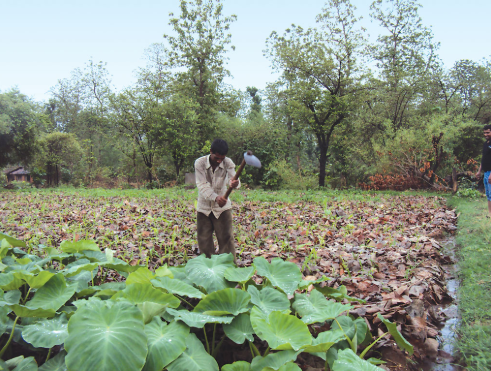
Method of cultivation: There are many types of buds in Bangladesh. Among them, the panchikuchi, the peacock, the panchamukhiacchu, the two-rod, oak kachu, the Manchchu etc. are notable. The following is discussed about the Panchikur farming system.

Suitable land and soil: Rain or irrigation water can easily be retained. This kind of semi-high, low-to-high, low-clay soil is suitable for wet cultivation.

Caste Selection: Many varieties of pancakes are cultivated in Bangladesh. Among these, lotas of lotus varieties are produced.

Planting of the seedlings: Generally, the paddy plant is required to be planted in the month of Falgun from Agrahayan. However, in advance for the crop, it can be sown in the Ashwin-Kartik month.

Construction of land: Two to three cultivation and ladder have to be made to make the land for the cultivation of water for the Kadam.

Fertilizer application: For panchakuchi cultivation, apply 10 tons dung hectare, 150 kg urea, 125 kg TSP, 150 kg MOP, 90 kg gypsum and eight kg of zinc fertilizers. During the last cultivation, dung, TSP, gypsum and zinc fertilizers will be mixed well with soil. After 20-30 days of planting the seedlings of urea and MOP fertilizer in the same amount, after the first installment and after 60-90 days, apply to the second installment in the second installment, and then mixed with the soil well.

Planting Method: 60 cm after making the land. Remotely rows 45 cm in every row After that (5-6 cm deep) panchikura sapna have to be planted. According to this distance, about 37 thousand (bigha 5000) seedlings are needed per hectare.

Next service: Needless to keep weeds free at Panikchur, if necessary. Running and shallow water in the beginning helps in the rapid growth of paniqua trees. Therefore, till planting of the seedlings, till the time of harvesting, 2-5 cm in the field. The water is to be kept in place. Apart from this, for the proper growth of water, sometimes the water from the land will be removed and the soil of the soil should be flushed out. After drying the land for two to three days, water will be irrigated again.

Suppressing insect spiders and diseases: Spider and lace insect in the worm and the stains of the disease in the disease. These insects and diseases will be suppressed through integrated pest management (IPM).

Crop collection and yield: It is useful for sprouting of 60 -90 days during the growing of paddy seedlings. After 10-15 days the laddi can be removed. And it is useful to collect paddy stalks within 140-180 days of planting of seedlings. If the cultivation of panchakchu in a better way, 25-30 tonnes of trunk and 10-12 tonnes of land is available from every hectare land.

Jumper pepper cultivation


It is strange to think, 400-500 years ago people did not know the pepper, the sesame did not understand how they became so voracious nation. The Portuguese have actually taught it. At the end of the fifteenth century, they brought the material of South America pepper into India and started using it and planting it. In the seventeenth century, pepper became popular as the main spice of cooking for the Indian people.

Captain T. H. Luine was the first DC in Chittagong Hill Tracts. In 1869 he published a book 'The Hill Tracts of Chittagong and the Dwellers Therein'. He mentioned that jumper pepper was done in April, the seeds of these chilli were knitted in April and the pepper was finished in October. The pepper is not usually sold in the market. If the price is sold then the price is eight. Semolina powdered seeds are available in 20-25 chillies.

Main crops of the CHT are Ginger, Yellow, Cotton Cotton, Sesame, Kachi, Cassava, Maize, Chilli, Fruit etc. Main agricultural products are available from zoom cultivation. The chilli that is produced in the hill, it is known to the locals as 'zum pepper'. Zoom pepper cultivation mainly meets the needs of pepper people throughout the year. However, the traditional method of cultivation yields less. Combination of modern methods can lead to rosary yields.

Zoom Chilli Features: Zoom peppercorns live twice as long as two years. With chilli throughout the year, but not only in the month of Chaitra but very little pepper or not. The tree is approximately 1-1.5 meters long and is bushy. The leaves are big and well-arranged. Chillies grow upwards or erectly. The color of pepper is white or light green, crushed orange red.

Diversity: Sunflower, paddy and locally grown varieties. Paddy chilli is very small and boiled. More on the tree than the pepper. This type of pepper is not usually cultivated or grown, automatically born in the jungle. Looks very small. This pepper is very popular to the hilly. Seed sowing: Zoom pepper is cultivated in two seasons. In the winter season, seeds are sown in mid-air to mid-Kartik (October-November) during the winter season. During the Kharif season or summer the seeds are sown from mid-Falgun to mid-Boishakh (March-April).

Seeding: Seeds are mixed with seeds directly mixed with other crops. About one kilogram of seed is weighed in every hectare. Many people sprinkle the seeds of pepper in the jute during the harvesting of other crops.

Land preparation and planting of plants: Some people have planted those saplings by making zam chilli seeds in the seed bed recently. If you want to plant the seedlings, take 500-600 g of seeds in the hectare. Seedlings can be planted once in a row after 60 cm of seedlings in a row, after 30 cm in every row. If cultivated in a salt or confection system, only zoom pepper can be cultivated in the mountainous flora of the mountain. One thorn land can be 4-6 meters wide. To prevent land erosion on both sides of this land, then there will be a permanent diversion of two rows of symmetric trees (Dumusim or arahar, bakful, dhaincha etc.). In the middle of the two enclosures, there is a lot more yield than the traditional zum chilli cultivation, if there is a need to plant zum chilli seedlings in line with the modern rules with organic and chemical fertilizers. Those zoom pepper lands will also be easier to work.

Care: Seed cultivation Zum chilli cultivation is similar to other zoom crops ie only weed is cleaned. But after planting saplings in the salt method, weeding and fertilizers have to be done. There is no such disease and insect attack. At the time of the chilli ripening, occasional anthracnoz or leaf and resulting brown dry wounds are present. If this disease is high, then any spraying of authorized dehrader (such as Dythane M45) will continue. When chili pepper ladders are attacked, then the affected chilli must be raised in the ground. If more, the approved insecticides will be sprayed.

Yield: Woven zoom pepper yield is very low, 4-6 tonnes of raw and 1-1.5 tons of dried pepper are available in hectares. But more than the yield of transplanted peppercorns

Textile farming


A lot of new vegetables in Bangladesh. The buttermilk is widely cultivated in different countries of China, Japan and Southeast Asia. The characteristics of this vegetable are its long, flat, white color, and leaves are light green and spherical.

In Bangladesh, the year-to-year buttermilk can be cultivated with winter. But it is good in the winter. Betel palm can be cultivated on any soil, but fine-sized and sandy loamy soil is better.

Caste: Bari Batishak-1, China, Chinese workers are popular with farmers.

Planting: Better planting of tall bed is better. Planting seedlings can be planted directly in the seed or planting seedlings. But it is better to plant saplings in planting. After plowing the land, seeds can be sown directly in the row by two rows at a distance of 60 cm in a meter wide bed. Apart from this, saplings can be planted in the seed bed 30 cm away from the plant. Planting should be between 20 and 25 days for planting.

Seed sowing or planting time: It is better not to sow in the rain during the whole year. For winter cultivation, the seeds can be sown from ashin to gramayana.

Seedling: If the seedlings are made, seeds will be required for every century of the land, and if the seeds are sown directly, the seed will need five grams for every percent of the land. For planting the seedlings, there will be 220 saplings per century. There are 9,500 seeds in every 10 villages.

Sowing or planting distance: Distance from row to row should be 60 centimeters and the seedlings of the seedlings will be 30 centimeters. Seeds take four to five days to grow.

Fertilizer application: For every tectonic farming, apply 40 kg of dung, one kg urea, 600 grams of TSP and 900 gram mop fertilizer per acre cultivation. During the preparation of the land, complete cultivation of dung (40 kg) and complete TSP fertilizer (600 grams) and half urea (500 grams) and half mop fertilizer (450 gram) will be applied in the land. After 20 to 25 days, the remaining half urea (500 grams) and MOP fertilizer (450 grams) will be mixed up well with the soil by applying the soil.

Service: Regular irrigation and drainage needs to be arranged. Hedge should be kept weed-free. If there is an attack of disease and insects, then the integrated pest management system has to be followed.

Harvesting and harvesting: Before harvesting crops, harvesting will be required. The leaves can be gradually taken from one end to the bottom without collecting trees at once. Crop can be harvested after 60 to 65 days after planting or 40 to 45 days after planting. The yield is 70 to 80 kg per century.